![]() |
IKEBANA, SADOU AND TOGEI \A COLLABORATION OF "WA"\ |
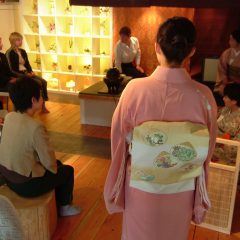
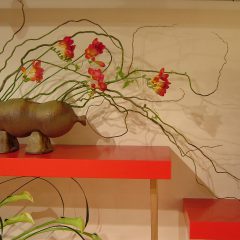
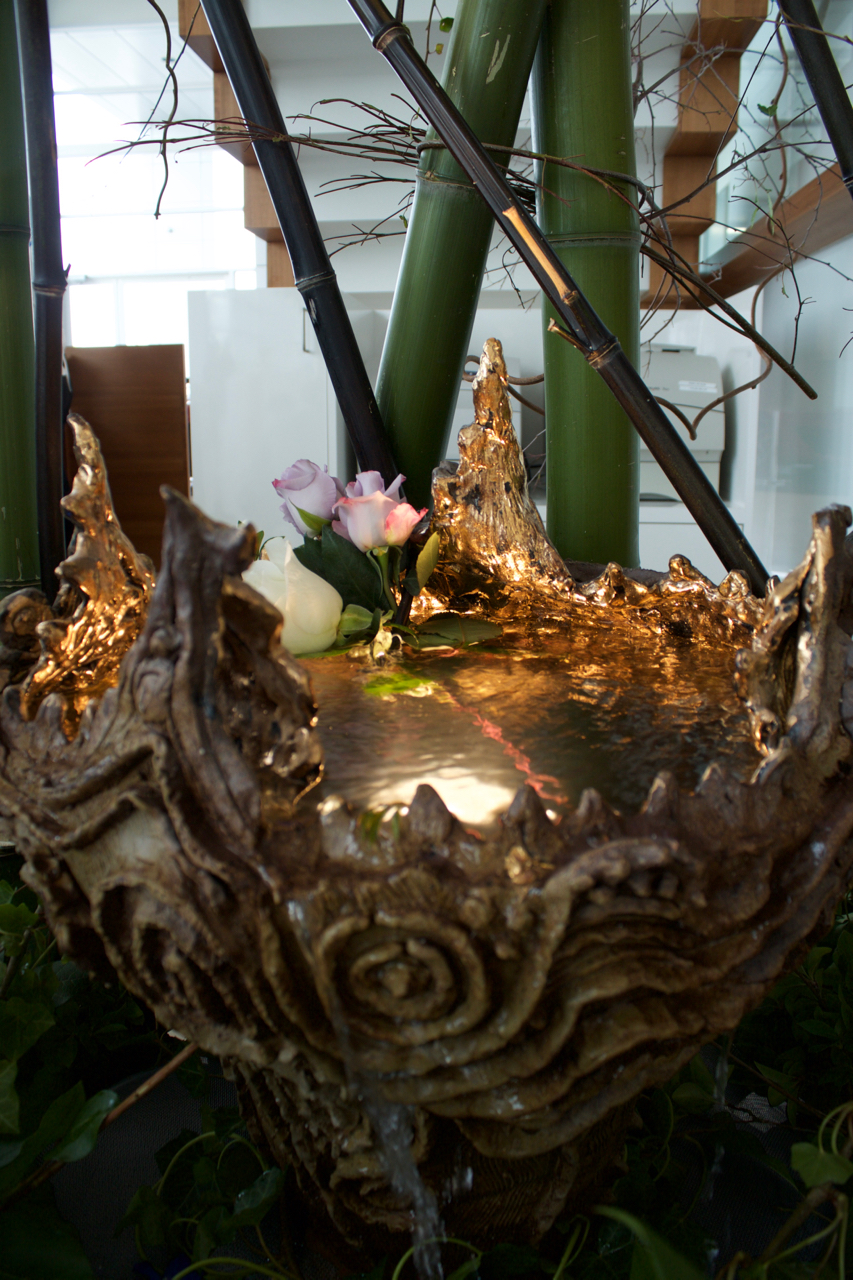
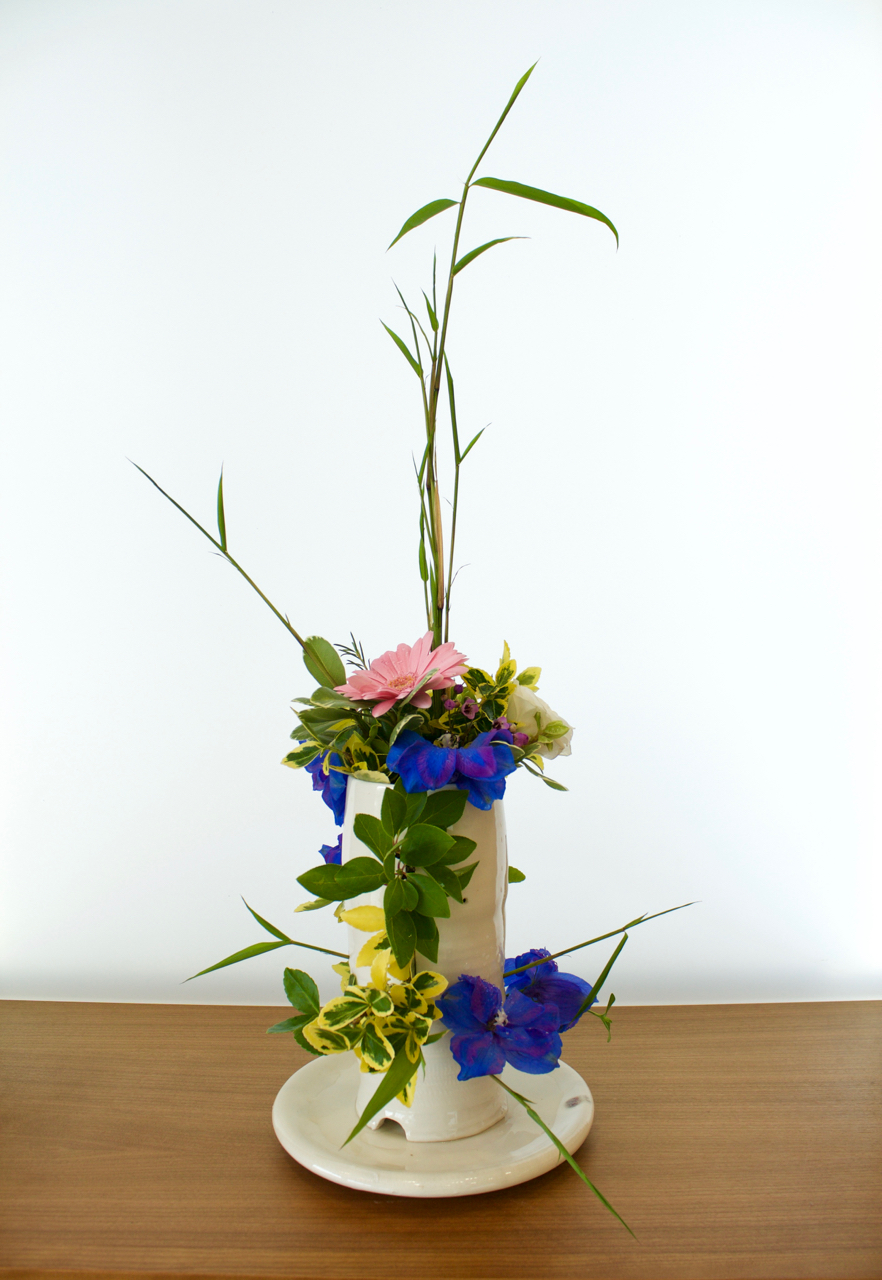
| In a space where there are many shelves, snow-like little vases filled with tiny wildflowers, and on the floor, large and impressive vases where vivid colored flowers are boldly arranged sit. On a raised area a ceremony has started, and in the hands a beautiful tea-bowl, the expressions worn by the people is very peaceful. In a modern loft studio a beautiful and slightly mysterious dimension existsc | ||
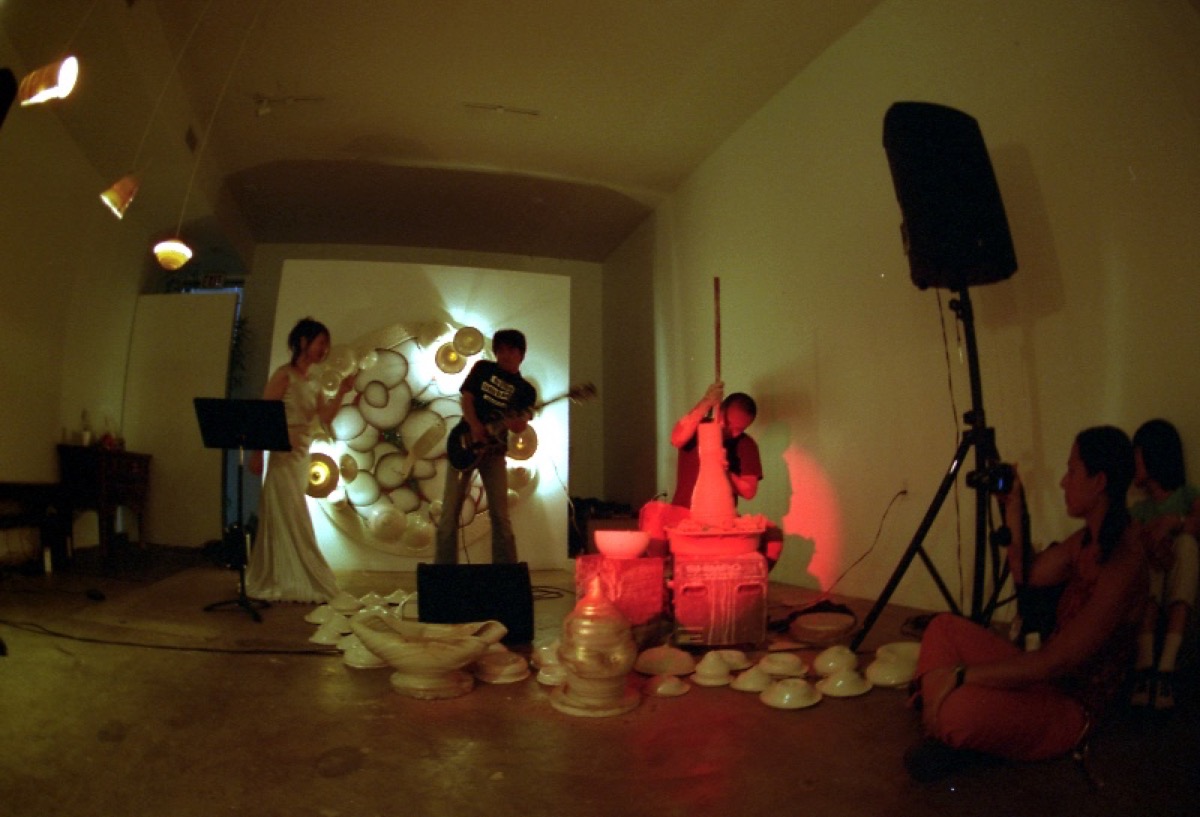
In May near Cambie and Broadway at Hide Ceramic works studio an Artisan Hide Ebina, Mishouryu style Ikebana, Omotesenke tea ceremony Vancouver kogura alliance Are the founding members of this Ikebana, Tougei(ceramic), and Sado(tea ceremony) collaboration. Hide is known for his many different types of ceramic pieces, working in mediums from earthenware to porcelain, making different types of pieces from tableware, vases, tea ceremony ware to lamps and aroma diffusers. He works on many ambitious projects often collaborating with other artists in different mediums such as music and video, and for the first this time with ikebana and Sado(tea ceremony). He believes that since ceramics have deep affiliations with Sado and ikebana from old it only seems natural that the people in these arts should also come together and enjoy the peaceful connection. |
||
Mishouyu style ikebana and Sado both have deeps roots
in Zen and the Buddhist Zen sect, Hidefs own beliefs for his ceramic
pieces also lie in the gWabi-Sabih or the Zen way. All three of these
activities have a core belief gZenh however in this beautiful sun-lit
studio the Zen way does not have a stiff and formal presence. The studio
and the people in it are all at ease conversing and mingling with each
other. This must be the gconnectionh Hide refers to. |
||
Hide believes by not following the exact Japanese tradition or borrowing heavy influence of the traditional art that these pieces although considered gJapaneseh are something very different. Surely the same thing can be said for both Sado and ikebana as well, both are very old Japanese traditional arts however when the surrounding is different and when the traditional flowers and tea ceremony ware is not available the art adapts, if it does not it cannot evolve and move forward and be introduced to places like Canada. One of the main consistencies in many of Hidefs works is the beautiful pure whiteness of the porcelain, it is uncommon to see pure white tea ceremony bowls or water pitches as many of them are traditionally earthenware. However Hidefs works with the white simplicity with the beautiful curves and bold characteristics gives each piece a contrasting and interesting flare. |
||
The Sado master or teacher Donna Blendon Is Canadian and while learning
Japanese and traveling through Kyoto, she was drawn to Sadou and started
learning the ways of Sado. Now she is a Tea Master and has students of
her own learning the way of tea. article by Mami Miyata, Vancouver Shimpo. Translated by Chihiro. all rights reserved. |
||
•Tea ceramony bowls and other ceramics by HiDe
Please don't hesitate to contact HiDe by email or phone if you'd like to place orders of your original tea ceramony ceramics by HiDe.
phone:+1-604.875.6002
Hide Ceramic works: 2368 Alberta St, Vancouver, B.C. Canada. phone: 778.863.1335 map
©hideart.com all rights reserved.